
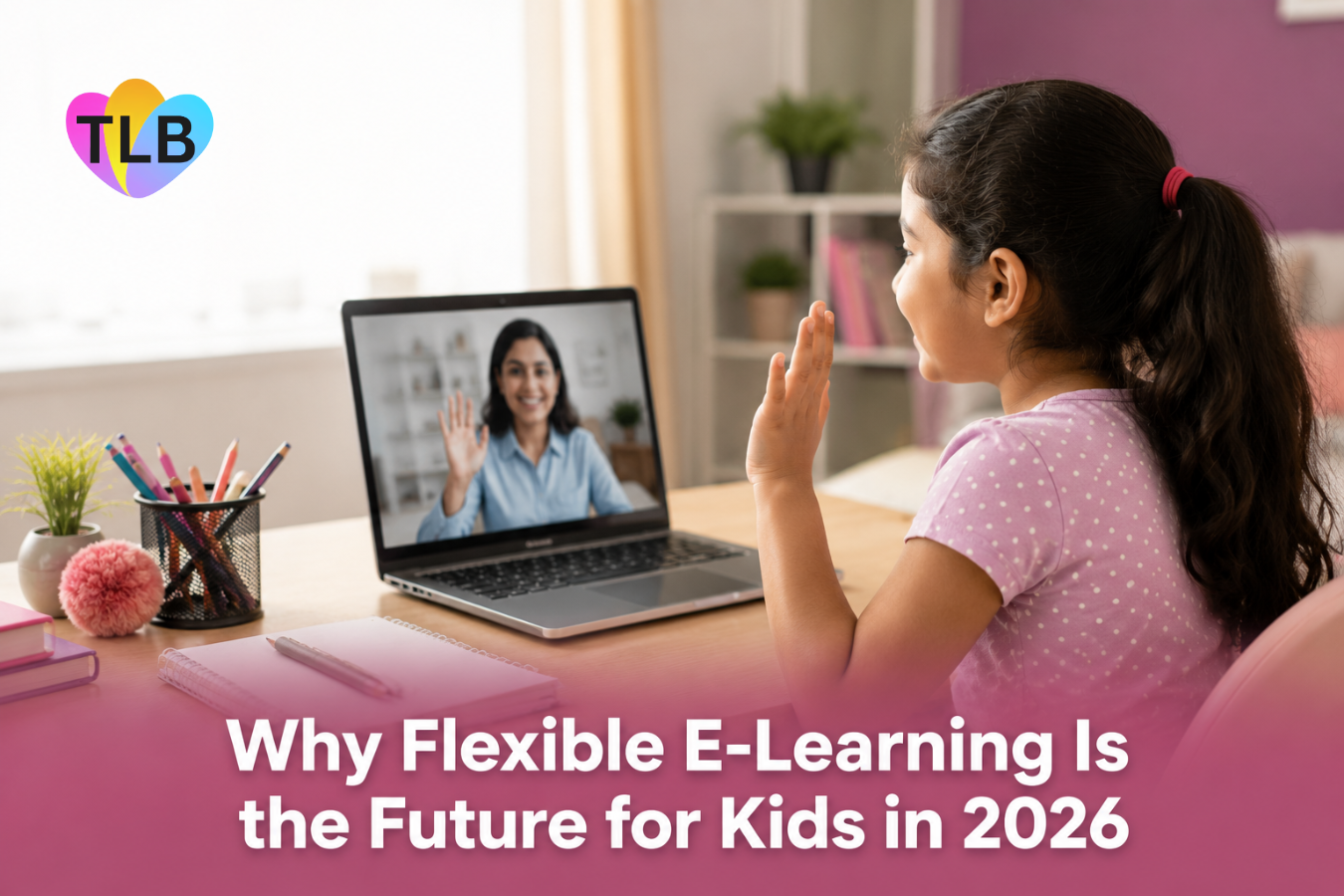
A few years ago, online classes for kids meant one thing: a pre-recorded video, watched alone, with no one to ask questions. That version of online learning is fading fast. In 2026, flexible e-learning looks completely different, and it is quickly becoming the first choice for busy families, not the backup option.
So what changed? Technology improved, but more importantly, teaching methods improved. Academies figured out that a screen does not have to mean a lonely, passive experience. It can mean a live classroom, just a smaller and more flexible one. So why are more parents choosing flexible learning for kids online instead of sticking with only traditional classrooms? Let us break it down.
What Does Flexible E-Learning Actually Mean?
Flexible e-learning is not just "learning on a screen." It means live classes that fit around your family's schedule, taught by a real teacher, with real interaction. Your child can ask a question and get an answer immediately. The teacher can see if a child is confused and slow down. This is a world away from watching a video with no way to pause and ask "wait, can you explain that again?"
In short, flexible online education for kids gives you the structure of a classroom with the convenience of learning from home.
Why Live Classes Beat Recorded Videos
Recorded video courses have one big problem: they cannot adapt. If a child does not understand something, the video just keeps playing. There is no teacher to notice, no way to ask a follow-up question, and no encouragement when a child gets something right.
Live online classes for kids solve this completely. A real teacher is present, watching, listening, and adjusting the lesson in real time. If a child is struggling with a sound in phonics or a rule in grammar, the teacher slows down right there and then. If a child already understands something, the teacher can move ahead instead of wasting time. This is why live, interactive online classes for kids consistently produce better results than passive video courses.
There is also the simple matter of motivation. Children pay attention differently when they know a real person is watching them, ready to ask a question or give praise. A video cannot do that, no matter how well it is made.
Learning That Fits Real Family Schedules
Between school, homework, extracurriculars, and just being a kid, families are busier than ever. Flexible learning for kids online means you are not stuck driving across town for a fixed class time. A child can join a live class from home, right after school, without losing an hour to travel each way.
Think about a typical weekday: school finishes around 3 PM, there is homework to do, maybe a sport practice, and dinner to fit in somewhere too. Adding a 45-minute commute for one more class often means something else gets pushed out, usually rest or play time. Flexible e-learning removes that commute entirely, giving families back time without cutting the learning itself.
For many parents, this alone is the biggest reason they choose online classes for kids over a traditional-only setup. It is simply easier to fit into daily life, especially for families juggling more than one child's schedule at once.
Curious how flexible online classes actually work?
Book a Free Demo →Better for NRI Families Across Time Zones
For families living outside India, flexible e-learning is not just convenient, it is often the only realistic option. Online education for kids means a child in Dubai, London, or Toronto can still learn Hindi, phonics, or grammar from a certified Indian teacher, at a time that works for their time zone.
This is exactly why The Learning Barn Academy schedules live classes around different time zones for NRI families, so distance is never a reason a child misses out on quality learning.
Small Batches Make Online Feel Personal
One worry many parents have is that online classes for kids can feel cold or impersonal. This only happens when batches are too large. When a class has just 4 to 6 children, like every class at The Learning Barn Academy, online learning actually feels warm and personal, because the teacher knows each child by name.
Blending Online With Offline When Needed
Flexible does not always mean fully online. Some families want the option of in-person classes too, especially for younger children. That is why The Learning Barn Academy offers both online and offline classes in Kanpur, so families can choose whichever mode suits their child best, or even switch between the two over time.
Parents Stay Involved, Not Left in the Dark
One more reason flexible e-learning works so well in 2026 is that parents are no longer cut off from what is happening in class. With small live batches, teachers can easily update parents on progress, flag any concerns early, and answer questions directly. This kind of open communication is much harder to achieve in large, impersonal online courses, but it comes naturally when a teacher only has 4 to 6 children to focus on.
The Bottom Line for 2026
Flexible e-learning is no longer an experiment. It is a proven, effective way for children to learn phonics, grammar, spoken English, music, and more, without sacrificing quality or personal attention. As more families discover live, small-batch online classes for kids, this flexible model is quickly becoming the new normal, not just an alternative.
If you are considering online classes for kids in 2026, look for three things: live teaching, small batches, and a certified curriculum. That combination is what makes flexible learning actually work. Without live interaction, it is just a video. Without small batches, it is just a crowd. And without a certified method behind it, even live classes can lack real structure. Put all three together, and you get something genuinely effective - which is exactly what we aim to offer at The Learning Barn Academy.