
After attending a phonics or grammar demo class, many parents feel excited and hopeful about their child’s learning journey. Demo sessions help parents understand teaching methods, classroom interaction, and how children respond to activities. However, after the demo, some parents unintentionally make decisions that can slow down their child’s language development.
Phonics and grammar are not quick-fix courses they are foundational skills that help children become confident readers, writers, and speakers. Understanding the right approach after a demo class can make a big difference in a child’s progress.
Here are some common mistakes parents make after attending a phonics and grammar demo class.
1. Thinking Phonics Is Not Needed Because the Child Knows ABC
Many parents believe that if their child already knows the alphabet, phonics is unnecessary. But knowing letter names and understanding letter sounds are completely different skills.
Phonics teaches children:
- Sound recognition
- Blending sounds into words
- Reading fluency
- Correct spelling
- Pronunciation skills
Without phonics, children may struggle with reading unfamiliar words confidently.
2. Expecting Instant Results After One Demo
A demo class only provides a small introduction to the teaching method. Real improvement takes time, practice, and consistency.
Children develop gradually in:
- Reading fluency
- Pronunciation
- Vocabulary
- Sentence formation
- Grammar understanding
- Communication confidence
Parents should understand that language learning is a step-by-step process.
3. Comparing Their Child with Other Children
Every child learns differently. Some children may speak confidently but struggle with reading, while others may read well but hesitate while speaking.
Comparisons can create:
- Pressure
- Fear of mistakes
- Low confidence
- Lack of motivation
Encouragement and patience help children learn more effectively than comparison.
4. Believing Grammar Should Start Only in Higher Classes
Many parents think grammar is only important for older children. In reality, early grammar learning builds a strong language foundation.
When children learn grammar concepts early, they become better at:
- Sentence formation
- Writing skills
- Vocabulary usage
- Communication
- Understanding language structure
Early exposure makes learning easier and more natural.
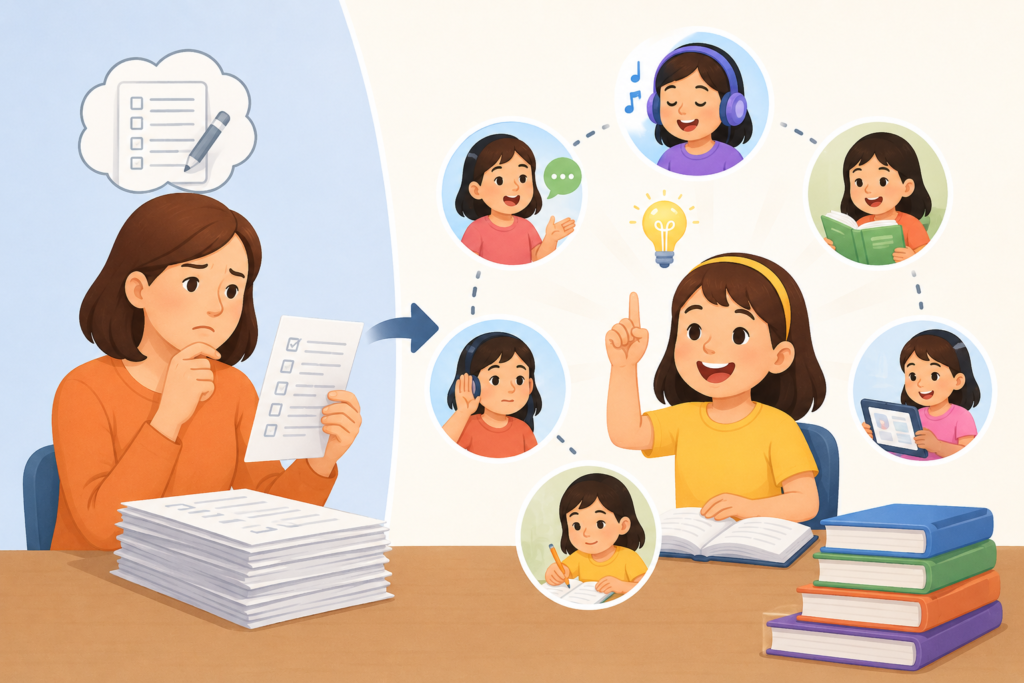
5. Focusing Only on Worksheets and Homework Pages
Some parents judge learning only by the number of worksheets completed. But phonics and grammar learning require much more than written practice.
Children also need:
- Sound practice
- Reading activities
- Speaking exercises
- Interactive learning
- Listening practice
- Repetition
Concept clarity is more important than simply finishing pages.
6. Discontinuing Classes Too Early
Sometimes parents stop classes after seeing a slight improvement in 1–2 months. However, language development takes continuous practice and guidance.
Consistency helps children:
- Read independently
- Spell correctly
- Speak confidently
- Improve pronunciation
- Understand grammar naturally
Stopping too early can interrupt long-term progress.
7. Ignoring Pronunciation Correction
Children can easily develop incorrect pronunciation habits if proper guidance is missing.
Phonics helps children:
- Learn correct sounds
- Improve clarity while speaking
- Build reading confidence
- Avoid wrong pronunciation patterns
Correcting pronunciation becomes more difficult as children grow older, which is why early support is important.
8. Assuming School Learning Is Enough
Schools focus on academics and large classroom teaching, but many children still need extra support in English language skills.
Additional learning helps improve:
- Reading fluency
- Speaking confidence
- Grammar foundation
- Pronunciation
- Vocabulary
Guided phonics and grammar classes can bridge learning gaps effectively.
9. Focusing Only on Marks Instead of Communication Skills
Good English is not only about scoring marks in exams. Children also need practical communication skills for everyday life.
Important language skills include:
- Speaking confidently
- Forming proper sentences
- Reading fluently
- Using vocabulary correctly
- Listening and understanding clearly
Strong communication skills help children academically and socially.
10. Not Continuing Practice at Home
Daily practice at home plays a major role in language improvement. Even 10–15 minutes of reading or sound practice can create noticeable progress.
Parents can support children by:
- Reading together
- Revising sounds
- Encouraging speaking practice
- Appreciating small improvements
- Creating a positive learning environment
Parent involvement increases confidence and speeds up learning.
Conclusion
Phonics and grammar are not short-term learning programs; they are lifelong language foundations. With proper guidance, consistency, and parent support, children can become confident readers, writers, and speakers.
Instead of expecting quick results, parents should focus on steady growth, regular practice, and building strong language skills step by step.
At The Learning Barn Academy, we believe every child can develop strong English communication skills with the right learning approach, encouragement, and consistency.
FAQs
1. What is the right age to start phonics classes?
Children can usually start phonics learning from the age of 3 years onwards. Early phonics learning helps improve reading, pronunciation, vocabulary, and speaking confidence from a young age.
2. My child already knows the ABCs. Does he/she still need phonics?
Yes. Knowing the alphabet is different from understanding letter sounds. Phonics teaches children how sounds combine to form words, which improves reading and spelling skills.
3. How long does it take to see improvement in phonics and grammar?
Every child learns at a different pace. Some children show improvement within a few weeks, while others may take longer. Regular practice and consistency are important for long-term progress.
4. Why is grammar important at an early age?
Early grammar learning helps children develop proper sentence structure, vocabulary usage, writing skills, and communication confidence. It creates a strong foundation for future academic learning.
5. Are worksheets enough for phonics learning?
No. Phonics learning also requires:
- Sound practice
- Reading activities
- Speaking exercises
- Listening activities
- Repetition and revision
Interactive learning helps children understand concepts better.
6. Why should parents continue classes regularly?
Language development happens gradually. Regular classes help children strengthen reading fluency, pronunciation, grammar understanding, spelling, and communication skills over time.
7. Can phonics improve pronunciation?
Yes. Phonics helps children learn correct sound patterns and pronunciation, making their reading and speaking clearer and more confident.
8. Does school English learning alone provide enough support?
Schools focus on academics, but many children still need additional support in reading, pronunciation, grammar, and speaking confidence. Extra guided learning can help bridge these gaps.
9. How can parents support children at home?
Parents can support learning by:
- Reading with children daily
- Revising sounds and words
- Encouraging speaking practice
- Appreciating small improvements
- Maintaining consistency in practice
Even 10–15 minutes of daily practice can make a big difference.
10. Why are phonics and grammar important for a child’s future?
Strong language skills help children become confident readers, writers, speakers, and communicators. These skills support academic success, public speaking, and overall confidence throughout life.
